Archive | May 2017

A Castle Worthy of a Marriage Proposal

Back in 1575, Queen Elizabeth I undertook a progress (tour through her kingdom) that included Kenilworth Castle in Warwickshire. Although there had been a castle there since the 1300s, Robert Dudley, Earl of Leisceister, was so determined to propose marriage, he built another castle next to the old one. He included a bedchamber and other rooms suitable for a queen and entertained her and her contingent there for over two weeks.

IMG_3855

Despite being in love with Dudley since they were in their childhood, Elizabeth turned him down. Dudley sold the castle, and the new owner sold off parts of it—stone and timber—leaving it mostly a ruin. The English Heritage has it now and has turned it into one of the safest castles to tour, with modern steps and railings, beautifully maintained grounds (the gardeners were there today), and a garden. They’ve also added informational signage, a tea room and a shop.

Dudley’s gatehouse was sold off as a private residence, its last occupant Siddeley of the motor company. The building now includes the story of Elizabeth and Dudley’s affaire, along with the itinerary of what happened while Elizabeth was at Kenilworth.

FullSizeRender

With several more stops to make, we headed west. Next stop: Hanbury Hall.


Observations at the Halfway Point

We’ve been in England since April 25 and are at the halfway point of our trip. In response to some queries we’ve been getting from those following this blog here as well as on Facebook and Twitter, here are some of our observations.

  1. Driving on the left side of the road isn’t difficult. It took just a few hours of driving away from London to get the hang of it. However, we do feel for the tires on that side of the car, as they have scraped the curbs of some very thin streets.
  2. There is absolutely, positively no way we could do this without a GPS. We have a Garmin in the car, and since we’re not getting service on our iPhone, Google Maps isn’t an option. Neither is a paper map. We would have to own dozens to have all the roads that we’ve been on.
  3. We knew to pack washcloths. Although they were provided in The Bloomsbury Hotel and at our bed and breakfast, The Dower House, in Rousdan, they have not been in evidence anywhere else. They are considered a “personal item”.
  4. Tipping is very different. Service charges are added to most restaurant bills, but sometimes they are not. The bartender at the pub is not expecting a tip, although you can offer to buy them a drink. And you don’t tip on pub food or take-away (carry out). In a taxi, you just round up the fair to the next pound.
  5. Despite our sister’s warnings about a lack of toilet paper in public restrooms, we have yet to find one that doesn’t have it. Even the loo at the most ancient castle, in a building that looked as if it has been built a thousand years ago, had t-paper. A few weeks before we departed home, we were removing half-rolls of toilet paper from the holder and packaging them into sandwich bags. We packed six such half-rolls. We still have all six.
  6. Gas is expensive. As is diesel. We’re driving a diesel car, which is efficient in that the engine doesn’t really run when the car is stopped, but we’ve still filled the tank. Twice. At ~£45 a tank (£1.19 per liter), we’re expecting to spend ~$200 on fuel (we have to fill up the car prior to returning it).
  7. We find ourselves cursing the Romans on a daily basis. The current roads are built atop those that the Romans put into place. They’re supposed to be wide enough for a chariot, which isn’t quite wide enough for a car. When you add hedgerows on either side of the road (with no shoulders)… well, you get the picture.
  8. We find ourselves cursing the Romans on an hourly basis. Roads going into towns and the roads inside of towns don’t follow a “block pattern” but rather are much like the spokes of a wheel. That means you have to drive to a town’s center roundabout to either stay on the same road (usually the second exit from the roundabout) or to get to the road that will take you to the next town (sometimes at an angle exceeding 300° from the one you were on). You’re rarely driving “as the crow flies”.
  9. We’ve hardly heard any British accents on this trip. Most working in the hospitality industry are from Eastern European countries like Estonia and Russia or Poland. 41% of those living in London are foreign-born.
  10. Free wi-fi has been in evidence nearly everywhere we’ve been.
  11. Fast food restaurants are few and far between, which is probably why there is so little litter anywhere.
  12. Paying for a membership in the Royal Oak Foundation was well worth it. They’re allied with the National Trust, so it means we’ve been able to get into every National Trust property, as well as park in their pay-and-park lots, without having to pay. The handbook of National Trust properties has been a great resource in determining the attractions that are available on our way to get to our next lodging.
  13. There are cameras everywhere—CCTV, traffic, security—so our entire visit is probably recorded.
  14. Despite assurances we would be swept off our feet by a handsome Britsh gent, it hasn’t yet happened. We still have another eleven days to go, though.

An Afternoon in Oxford

Oxford is a town meant for cyclists and walkers, students and academics. As in most historic English towns, parking can only be had at a premium. We had an hour in our spot (£3) and the popular hop-on, hop-off tour offered an hour tour that included  audio and a pair of earbuds. We hopped on and off we went on the top of a double-decker bus.

IMG_3831

Note: Free walking tours of the city are available at 15-16 Broad Street (the information center); however, having spent most of our day traveling and touring Blenheim, we arrived in town too late for today’s tours.

With an almost dead battery, we weren’t able to take nearly as many pictures as we would have liked. And the tour goes by fast! Here are the photos we were able to take. Note the various styles of architecture. This city has been here since Roman times, and the buildings reflect it. In one stretch of street, there are buildings that are medieval through modern.

We did our own driving tour around the city after the tour, mostly because we missed an exit on a roundabout. But we didn’t mind. On a Sunday afternoon after four o’clock, most people are indoors having tea or watching cricket.

Next up: We’ll head north to Derbyshire, but we have stops to make along the way. Think My Fair Groom and The Desire of a Lady. Ta-ta for now!

A Great Day to Visit a Palace

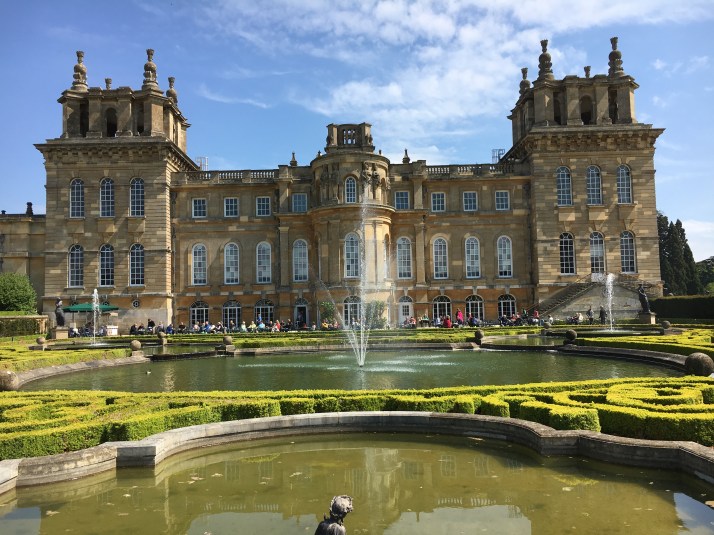
At the halfway point of our trip, we spent the most on any of the attractions we’ve visited so far and paid a visit to Blenheim Palace. With an extensive interior available to the public as well as impressive water terraces, cascades, a lake and a pleasure garde, it was well worth price of admission. And photography is allowed!

IMG_3791

Blenheim is named for the location of a battle in France, a battle won by John Churchill. Queen Anne was so thankful, she gave him a dukedom, Marlborough, and the grounds on which a palace could be erected near Woodstock, about twenty miles north of Oxford. Construction would take more than thirty years—John didn’t see its completion, although his wife, Sarah Jennings, did. She was the one overseeing the building (and complaining and questioning every step of it and every bill—she thought it a huge waste of funds). Here’s the gate just to get into the courtyard.

IMG_3711

The main entry into the “house” is past the courtyard and currently undergoing some construction. Along the way, Roman statues are mounted atop the walls and set into niches.

Inside, the walls are hung with portraits of all twelve of the dukes and duchesses of Marlborough as well as other aristocrats and Queen Anne. Tapestries created to depict John’s victories in battle cover the walls in several drawings rooms. As in any home this grand, you’ll want to look up!

The number of marble busts scattered about is impressive. Some are of the Marlboroughs, but most are Roman emperors. Statues of gods such as Flora and Bacchus, and an imposing Queen Anne, are everywhere.

Probably the most impressive room on display is the library, which seems to run the length of one end of the palace. Besides the rows and rows of books, there are details here that require a bit of study.

IMG_3754

At one end of the library is a massive pipe organ! (The chapel is on the other side.)

IMG_3772

IMG_3783

The home is filled with beautiful furnishings, exquisite china, and display cases filled with lead toy soldiers, accoutrements, seals and more. There’s a model of the palace done with matchsticks whole another is actually a cake.

When we ventured outside, we found water terraces surrounded by statuary.

There is a long lake with cascades at one end, and the walk there takes you by the Winston Churchill Memorial Gardens.

Although we spent nearly three hours on the property—we took the walk to the cascades—you could probably do the tours in two. On a day like today, it was worth taking the extra time to enjoy the fabulous weather and an impressive palace.

Next up: Oxford!

If This is Saturday, It Must be Oxfordshire

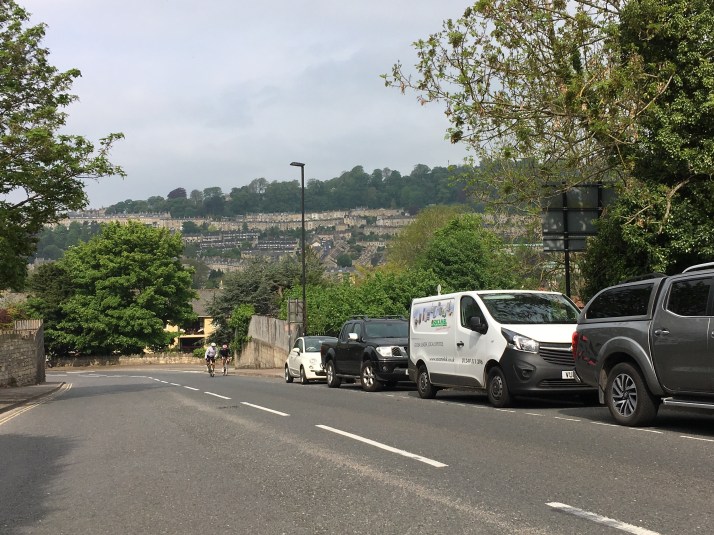
We took our leave of Bath this morning under an overcast sky. The road west gave us a knew vantage of the historic city.

IMG_3682

And it gave us an opportunity to check out some more of the buildings. Is that 1845?

IMG_3683

Our goal today was to find the farmlands of Henry Foster, Earl of Gisborn, (The Seduction of an Earl) and the Glouchester/Oxfordshire setting for parts of The Caress of a Commander. Once we found Tadpole Bridge, we knew we were on our way to success!

The stone bridge is just one lane wide and even smaller than we expected. It crosses the River Isis (Thames) next to The Trout, a pub and country inn that’s been there for over 400 years.

IMG_3699

Once you cross the bridge, you’re into the fictional Gisborn lands. The well-tended farm fields extend from the river north on both sides.

Continue north and you’ll discover the village of Bampton, a charming town with narrow streets and buildings made of Portsmouth stone. This is where Lady Gisborn and Lady Barbara go shopping in The Caress of a Commander.

East of Bampton (and just over the current shire border) is the village of Broadwell. Lady Barbara’s fictional ramshackle cottage is long gone, but other, more sturdy stone buildings remain, including the church. William Slater spots the spire of this church during his search for Barbara.

IMG_3702

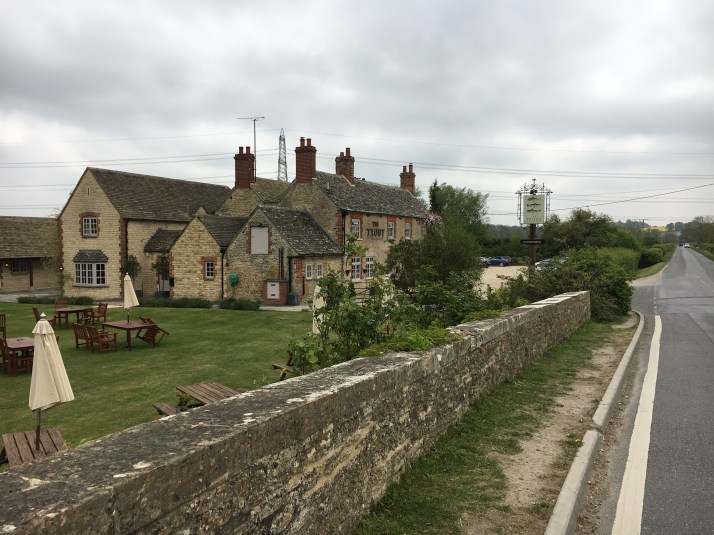
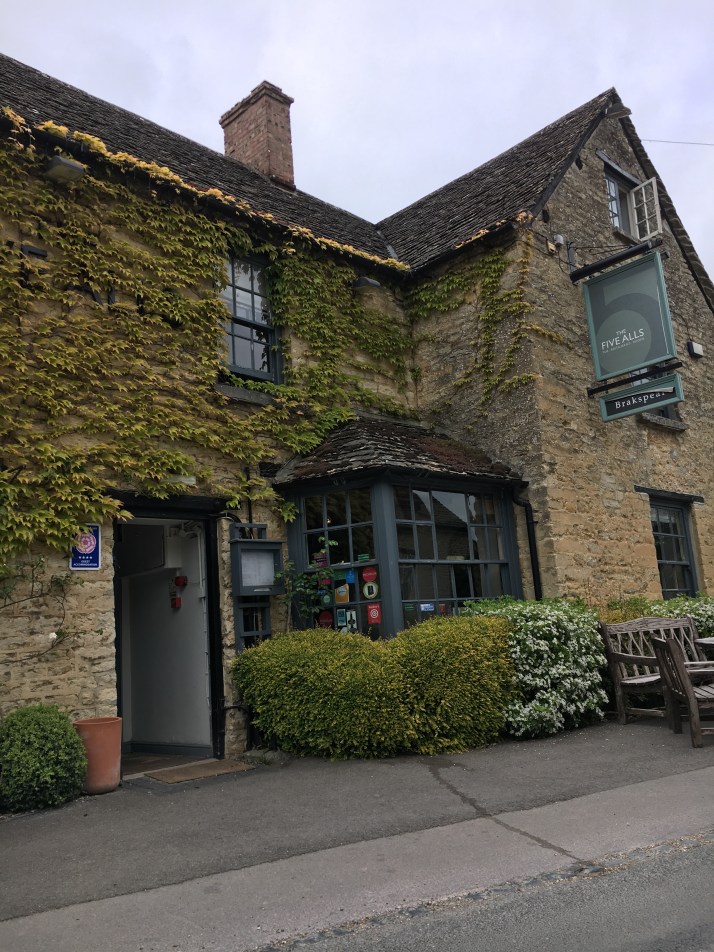
Our one failure occurred in our search for The Five Bells, the tavern at which William asks after his long-lost love. We couldn’t find it. Broadwell isn’t that large, and we drove through going both directions, but had no luck. We did find The Five Alls over in nearby Filkins, though (probably named for the same five church bells).

IMG_3704

We continued on our way to Wattlington, where we’re spending two nights for our forays into Oxford, passing some beautiful lands along the way.

Our accommodations are at a lively country hotel called The Lambert Hotel, and our room is huge! Given the bar area next to the check-in desk, we expect to get some writing done this evening. Ta-ta for now!


A Walking Tour of Bath and Fashion at its Finest

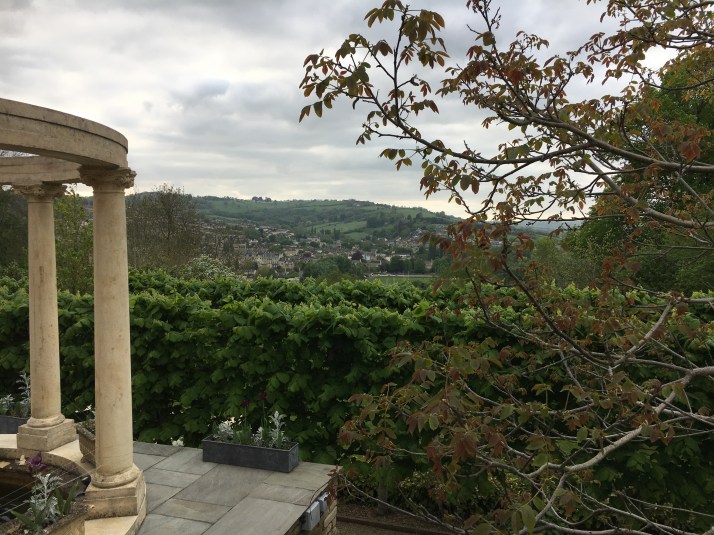
Whether you visit Bath for a day or several days, your immediate impression may be of having stepped back in time. When seen from one of the surrounding hills, the town looks like an Italian villa, with homes built on terraces and a huge abbey down in the valley. Driving on one of the curved streets will have you realizing something very quickly. All the buildings are made of the same cream-colored stone. Bath stone.
IMG_0565

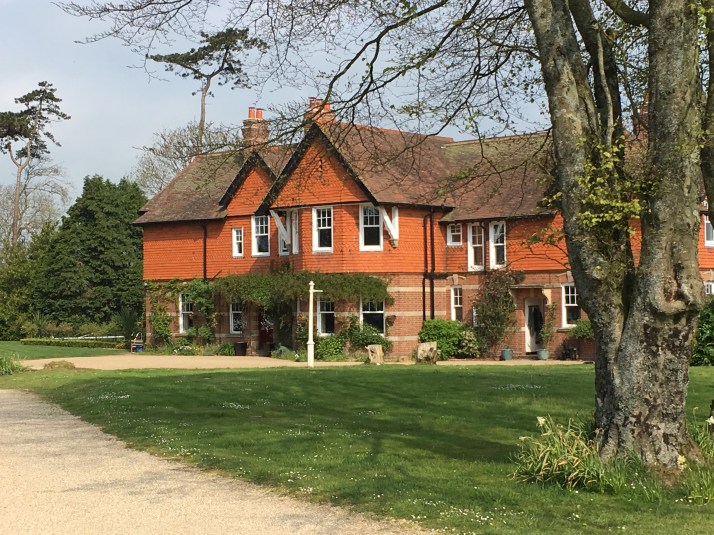
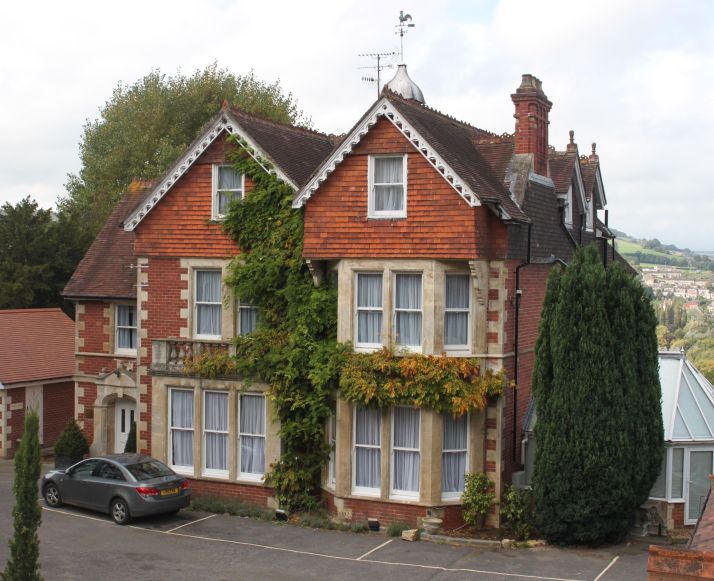
All but one, that is. Tasburgh House is built of red-brick. It’s original owner, John Berryman, was an official Royal photographer to Queen Victoria. Being from Norfolk, where red brick is king, he received permission from the queen to defy the local rule of building with Bath stone and created a house with seventeen bedrooms. Current owner Susan Keeling has transformed Tasburgh House into a 15-room boutique hotel, where comfort and hospitality reign supreme. We are fortunate to be spending two nights here while researching the area for use in a future book or two.
IMG_3562

IMG_3563

We started our morning with a quick taxi ride into town, where we joined a walking tour hosted by one of the Mayor’s Honorary Guides. These Blue Badge Guides provide a history lesson as well as spend over two hours leading groups all over the city—all for free. So free, in fact, they’re not allowed to accept tips!

The center of all the bustle is Bath Abbey. Since it’s adjacent to the Roman Baths and The Pump Room, there is a crowd around it in the mornings.

IMG_3580

Even if you don’t buy a ticket to go the Roman Baths, you’ll get a peek at part of them on the tour. There are other baths in town, as well, and most of them have their origins beneath the pavement of where you’re learning about the Romans building their temple to Minerva, Aquae Survis.

The story of how the thermal springs were first discovered is an even better tale, one we won’t cover but can be found Here. it helps explain why you’ll find references to acorns and pigs throughout the town.

Because we were most interested in the Georgian-Regency aspects of Bath, the areas designed by John Wood the Elder and his son, the Younger, were of the most interest. The Royal Crescent is probably most famous, as images of the thirty houses joined into a crescent are synonymous with Bath. The building on the right is #1 Royal Crescent, a museum set up as a typical Georgian home.

The Circus is another of the Woods’ design, with three crescents of ten homes each forming a circle that’s suppose to have been the Elder’s take on Stonehenge.

There are surprising finds throughout the tour, like the “Lovers Lane” mentioned in Jane Austen’s “Persuasion”, and how the term “hanging loo” came to be (look for the dark bump out near the corner in the photo to the right).

Another benefit of taking the walking tour is what you’ll see indoors—the Assembly Rooms. Painted in “ballroom blue”, these elegant rooms hosted balls and special events—and still do! Those chandeliers? They’re the second versions, although only because the first versions were taken down shortly after their installation when an “arm” fell off of one of them during a ball.

The pieces of those first chandeliers were put together into one grand chandelier that hangs in another of the rooms (left photo below). It’s nearly eight feet in height.

At the conclusion of the tour, we stayed in the Assembly Rooms building in order to visit the Fashion Museum. This historical presentation of fashion displays 100 featured pieces beginning with the oldest example of a man’s shirt up to a current outfit. We were especially interested in the gowns and menswear from the Regency era.

Our favorites were these. A special exhibit currently features lace.

After the Fashion Museum, we paid a visit to the Roman baths, had high tea at The Pump Room, and shopped a bit before taking a taxi back to Tasburgh House.
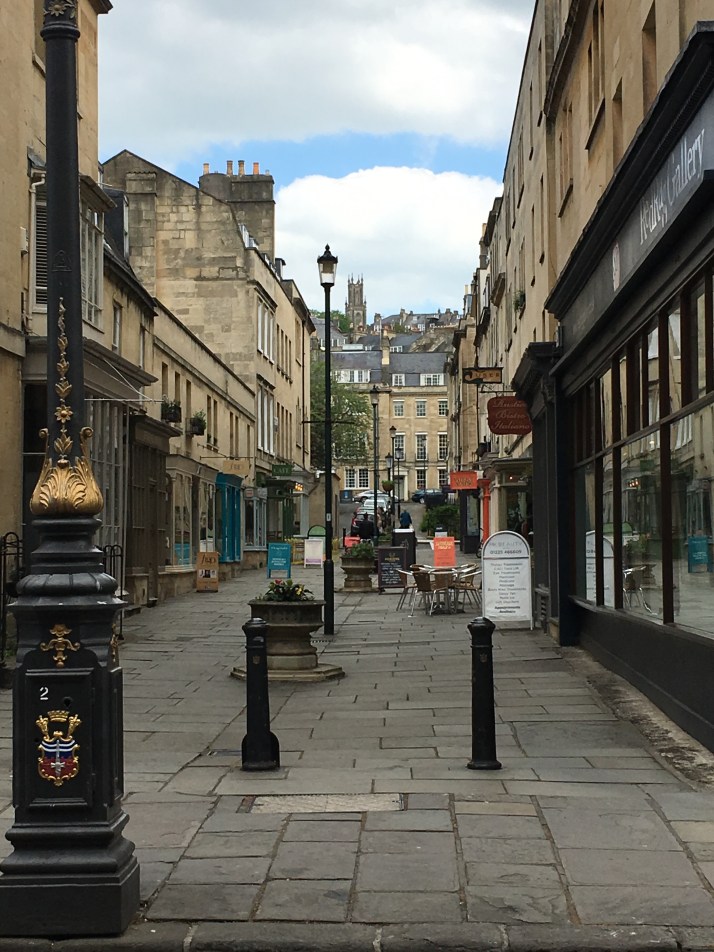
IMG_3607

Next we’ll be off to Oxford, and we’ll have some stops along the way. More about those in the next post. Ta-ta for now!

SaveSave

One-thousand Years of Rebuilding, Renovation, and Remodeling Makes a Modern Castle—Dunster

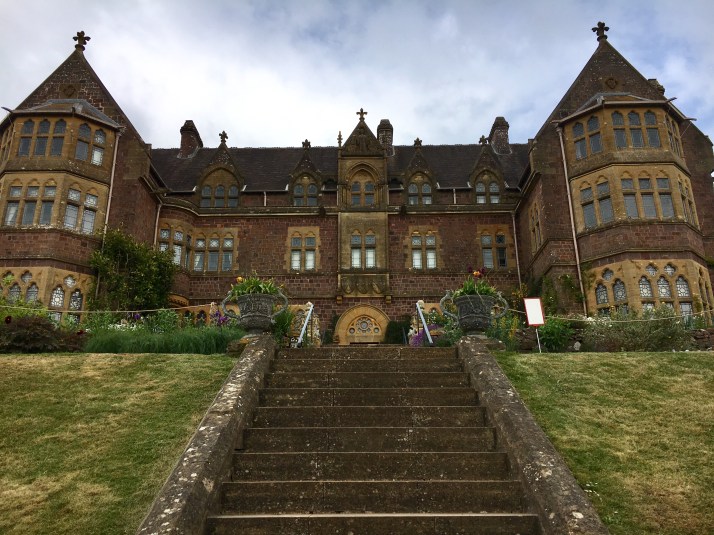
Like many castle towns, Dunster in Somerset lies below its namesake, its thin, winding streets lined with shops and homes. With its own car park—National Trust sites are good in that regard—Dunster is easy to access once you get past that steep climb. Once you do, though, you’re in another era. Despite its initial age, this castle and its surrounding gardens is now a Victorian country house. It was home to the Luttrell family for 600 years.


Some things remain of an earlier era, like the 13th century gateway, and the ruined curtain wall (the English Civil War saw most of it demolished). Others have been rebuilt, like the octagonal towers.


Others remind you this castle has been remodeled.

IMG_3530

The house is open to the public, and given it’s completely furnished, it’s worth the tour.


You’ll find some more modern furnishings, as this house was occupied by its last owners until 1997. The library is especially impressive.


On the outside, you’ll find well-tended gardens, and flowers everywhere. And if you look to the opposite hillside, you’ll see the folly. We were told it’s simply a hollow tube, and since we didn’t go up there to see for ourselves, we’ll take their word for it.

IMG_3561

We left Dunster about four o’clock for our trek to Bath. We’ll have a two-night stay in the town the Romans built. Ta ta for now!

What a Bobbinet Can Build—Knightshayes

In 1808, John Heathcoat invented a device, a warp loom, that allowed for the manufacturing of lace. After setbacks in other locations—Luddites destroyed his initial looms—he eventually set up his own company in Tiverton, became a Member of Parliament, and made a fortune. Knightshayes is the house and grounds he built with that fortune.

IMG_3500

A Victorian designed by William Sturgess, Knightshayes is an example of whimsy and wonder, its gardens and grounds designed for long walks and expansive views of Tiverton and the surrounding area. Burgess’ work can be found on the ceilings and walls as well as in the staircase. The signs of the zodiac are all depicted on one ceiling, although because there are only eight circles, every other one features two symbols.

The furnishings are impressive, and although the place feels like a hunting lodge—hunting trophies are everywhere—there are signs a women lived here, too.

The gardens are filled with surprising topiaries, blooming trees, and all manner of flowers. There are a variety of trees on the property, including one of the oldest redwoods on the planet.

IMG_3517

We only spent a bit over an hour on the property—but it was enough time to tour the house and the closest gardens and grounds. A picnic here would have been perfect, but we still had one more place to get to before heading to Bath. Up next: Dunster Castle.

She Sells Sea Shells

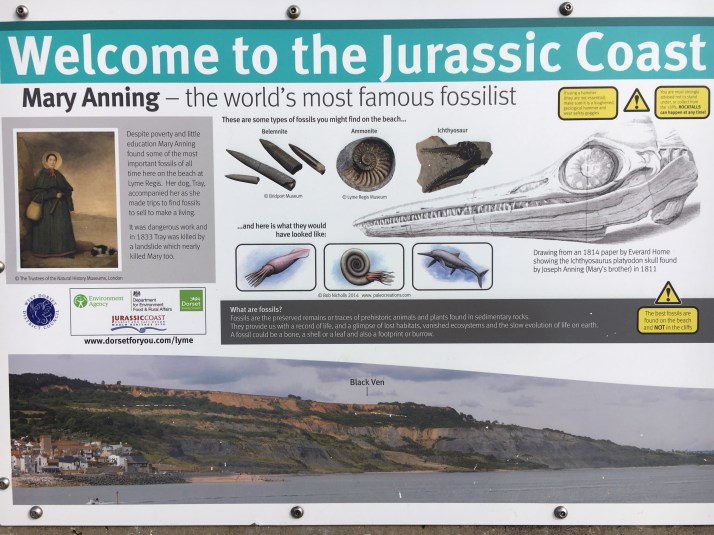
At least she used to. Mary Anning, the woman for whom the tongue twister was originally written, was the first to discover and identify a dinosaur in England. She grew up in Lyme Regis, where she and her brother learned about fossils and paleontology from their father. And since she lived during the Regency era, she’s had one mention in one my our books, The Gossip of an Earl.

We spent the night at the bed-n-breakfast, The Dower House, in Rousdan. With fluffy soft towels, a comfortable bed (the best we’ve slept in so far on this trip), an excellent breakfast, and gracious hosts in Neil and Rosemarie, this is the place to stay should you ever find yourself along the Jurassic Coast.

IMG_3436.JPG

We spent the late morning down on the waterfront in Lyme Regis. Starting at The Cobb, where a medieval seawall still helps protect that part of coast, we made our way along the upper garden walkway and then finally down to the beaches.

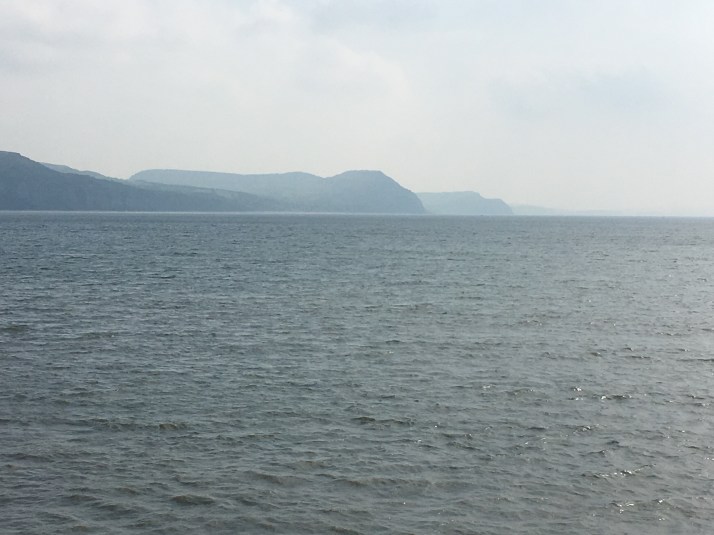
The beach and cliffs from which Mary extracted most of her fossils is at the other end of the Lyme Regis, a comfortable walk on this day as it wasn’t raining and, despite the wind, it was warm.


FullSizeRender

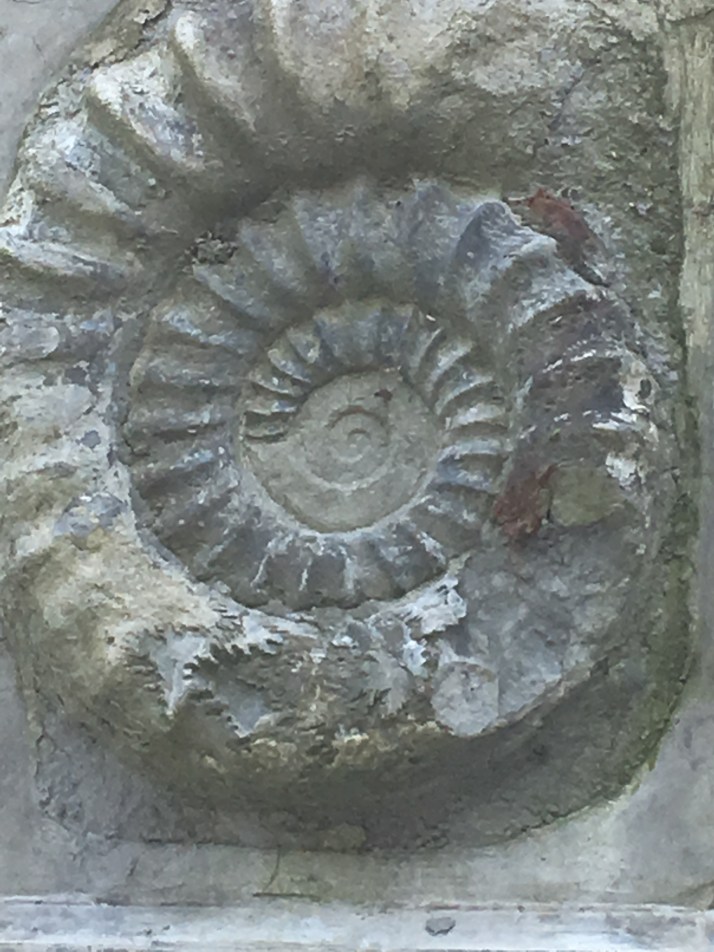
The Gold Cap, just to the left of the photo above, is shown here. The entire coast is made up of Jurassic-era fossils, some newly exposed when the tide goes out.

IMG_3447

They say if you find a fossil among the rocks, you can take it; however, most of those rocks are really heavy! This one measures over a foot in height!

IMG_3450

We took our leave of Lyme Regis just before noon. Next stop: Knightshayes.

One-Thousand Years of Awe-inspiring Ruin

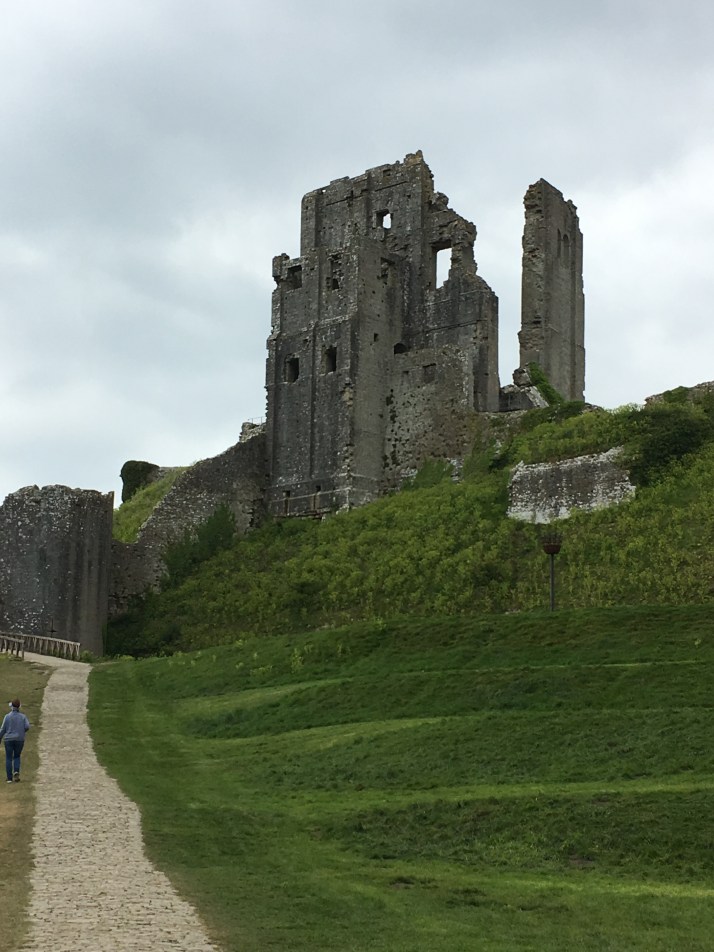
On our way to Lyme Regis (where we’re spending a night in a glorious bed-n-breakfast called The Dower House), we took a detour south to the site of Corfe Castle. The ruin is clearly visible atop a high hill as you make your way into the village that sits at the base, the buildings there nearly as old as the castle itself.

IMG_3363

A walk through the main gate reveals just how extensive the castle was in terms of size. Remnants of walls and towers line the way up the hill.

Once you reach the top—a somewhat treacherous climb if you’re not wearing the right kind of shoes—the views are stunning in all directions.

The keep has suffered over the thousand years since Corfe was built, some of the walls having fallen away. The basic structure remains, however.

And just when you think you’ve seen it all, there’s more beyond and through the openings in the walls.

Down in the village below, you’ll find the oldest pub in England as well as the smallest town hall. And just beyond is God’s Acre, a cemetery that was consecrated by the Bishop of Salisbury.

After such a steep climb and descent, we were ready to make our way to Lyme Regis.  We’ll be on the hunt for some fossils on the morrow. Ta-ta for now!