One-Thousand Years of Awe-inspiring Ruin

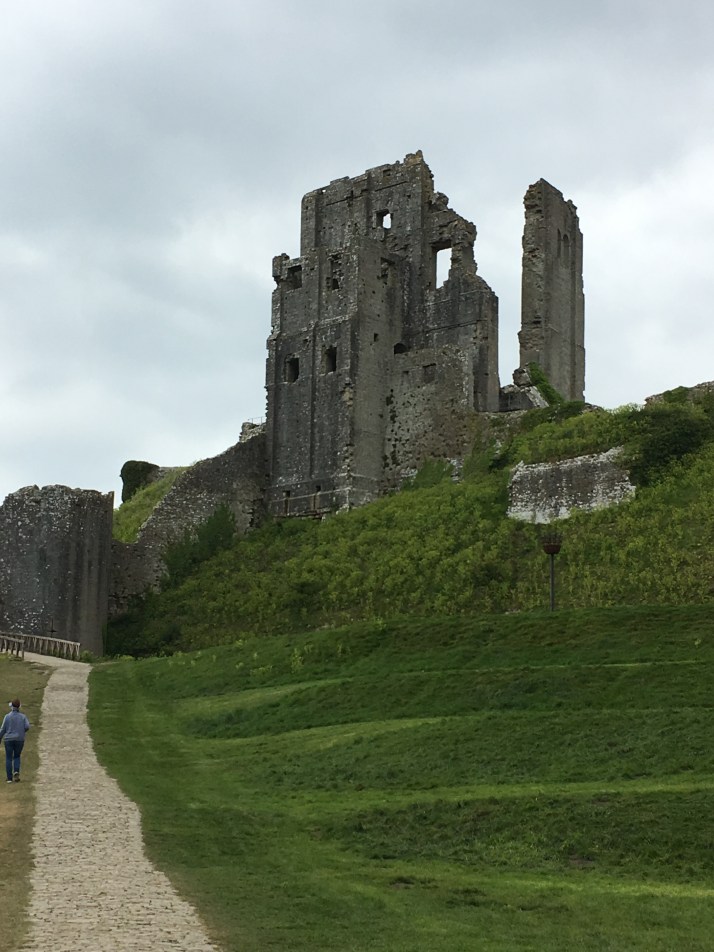
On our way to Lyme Regis (where we’re spending a night in a glorious bed-n-breakfast called The Dower House), we took a detour south to the site of Corfe Castle. The ruin is clearly visible atop a high hill as you make your way into the village that sits at the base, the buildings there nearly as old as the castle itself.

IMG_3363

A walk through the main gate reveals just how extensive the castle was in terms of size. Remnants of walls and towers line the way up the hill.

Once you reach the top—a somewhat treacherous climb if you’re not wearing the right kind of shoes—the views are stunning in all directions.

The keep has suffered over the thousand years since Corfe was built, some of the walls having fallen away. The basic structure remains, however.

And just when you think you’ve seen it all, there’s more beyond and through the openings in the walls.

Down in the village below, you’ll find the oldest pub in England as well as the smallest town hall. And just beyond is God’s Acre, a cemetery that was consecrated by the Bishop of Salisbury.

After such a steep climb and descent, we were ready to make our way to Lyme Regis.  We’ll be on the hunt for some fossils on the morrow. Ta-ta for now!

A Royal Regency Attraction

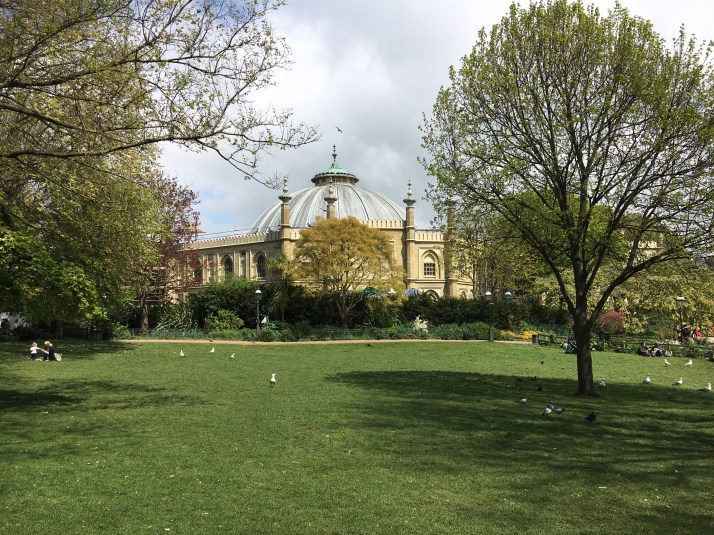
Despite staying in a hotel in Brighton, we’ve been spending the past few days traveling all around the Sussex countryside. Today was the day to spend time in Brighton proper. The city, a popular summer resort during the Regency era, gained fame when the Prince Regent decided he preferred it over being anywhere near his father, King George III. He already owned a hunting lodge and decided to have it converted into a royal pavilion when he was teased about how the stables built for his horses was grander than his abode. The Dome is now home to a theatre.

IMG_3352

John Nash, the architect, devised a way to retain the existing structure and build a palace around and on top of it. His engineering scheme made it possible to create and support minarets and domes to so the exterior looks East Indian.

IMG_3350
Nash also designed the landscaping, eschewing the traditional English gardens appareance in favor of meandering groupings of flowering plants and trees.

Given the exterior, you don’t expect the Chinosierie interior. Prince Charles was such a fan of all things Chinese, nearly all of the decor in the pavilion employs the European interpretation of Chinese and East Indian artistic traditions.

Prince Charles (later King George IV) loved to entertain and frequently hosted guests at the pavilion. While the entry is sedate and calm, the great hall, banqueting room, and music room are meant to awe visitors. Since interior photography is not allowed, these are postcard pictures.

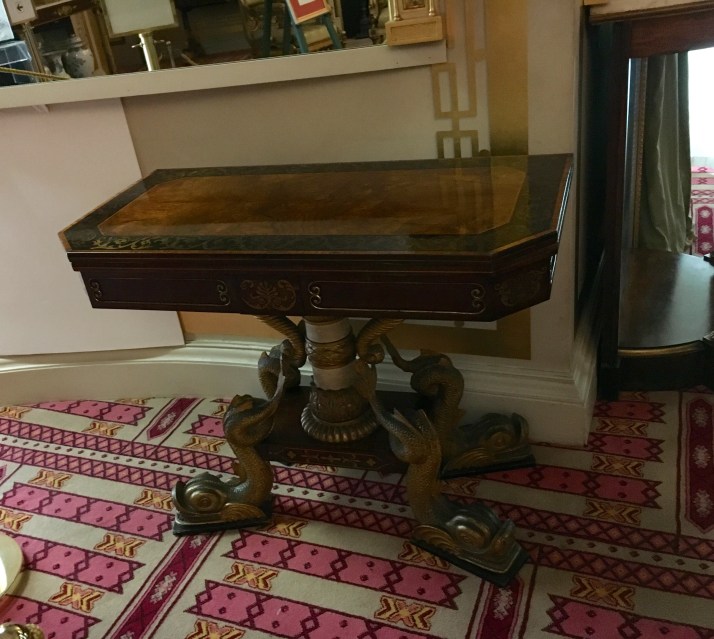
When Queen Victoria decided to sell the palace—she was never comfortable there—the fixtures, fine furnishings and decor were removed. Once the palace was restored to its former glory, most of what had been removed was returned.

FullSizeRender

Once we completed our tour of the Royal Pavilion, we took our leave of Brighton and made our way east to Dorset and one of the most impressive locations we’ve visited. For images of our visit to Corfe Castle, see the next post. Ta-ta for now.

A Trip to 1066 in Hastings

Should you ever decide to visit this ruin of a castle, be sure your GPS knows it’s at the top of the hill and not in a store two-hundred feet below. It took some maneuvering to get up that hill—the one-lane road is extremely steep and narrow and, there are actually townhouses lining it. Our knees hurt just thinking about how these people get home every night.

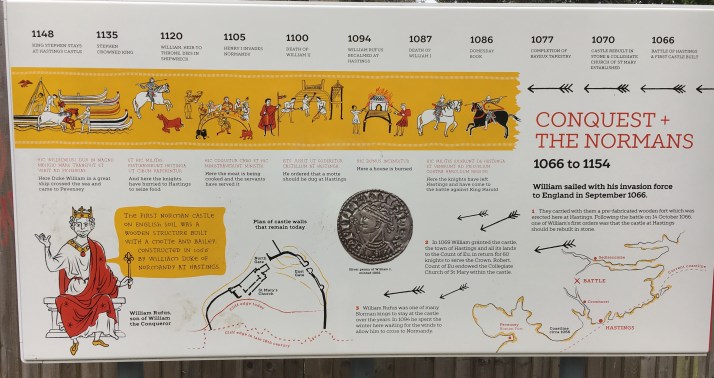
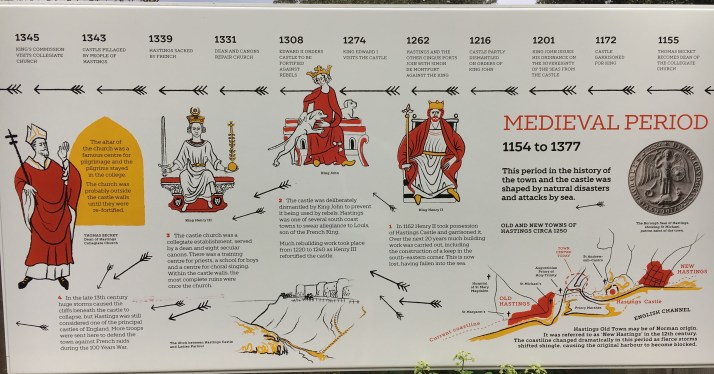
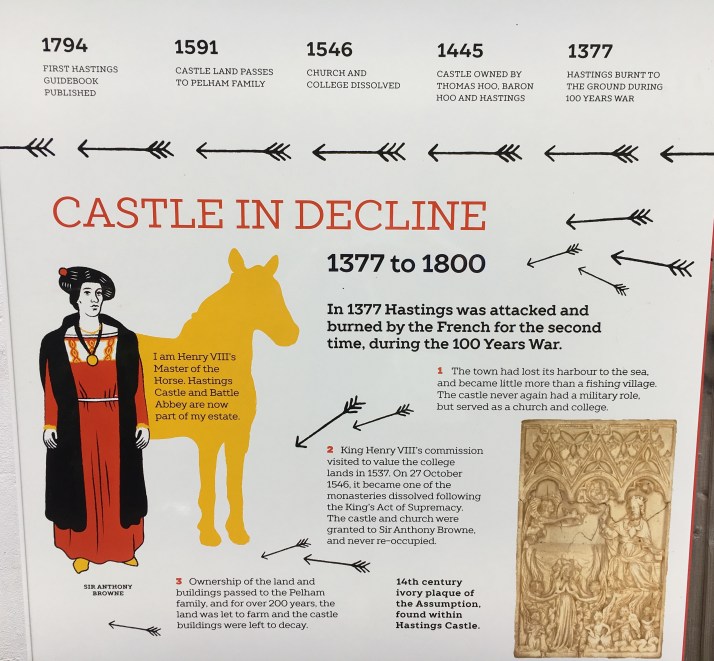
Before you reach the Hastings Castle, there are several panels that give you a history of what happened here. We’re including them here because there’s not a lot to this castle except its history—and it’s rather important!

IMG_3318

IMG_3319

IMG_3320


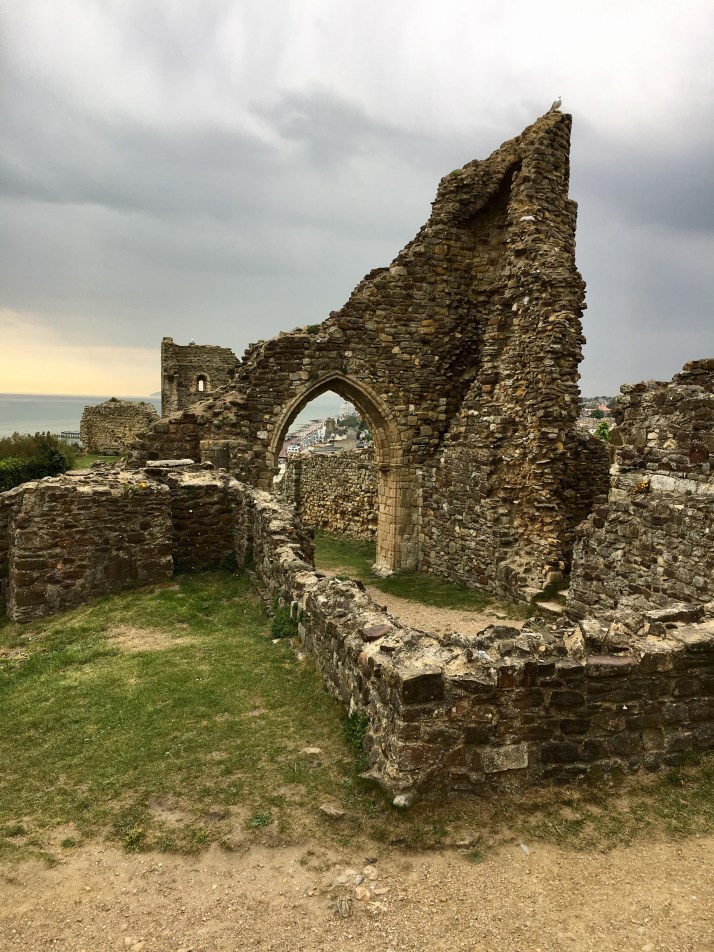
When you reach the castle grounds, you quickly realize this was not a large castle. The grounds around it have shrunk over the years, the cliffside down to the water having eroded away over the years. The “moat” was actually a deep ditch, and getting to the structure was probably as challenging back then as it is now.

FullSizeRender 9

The church would have been just beyond the Gothic arch.

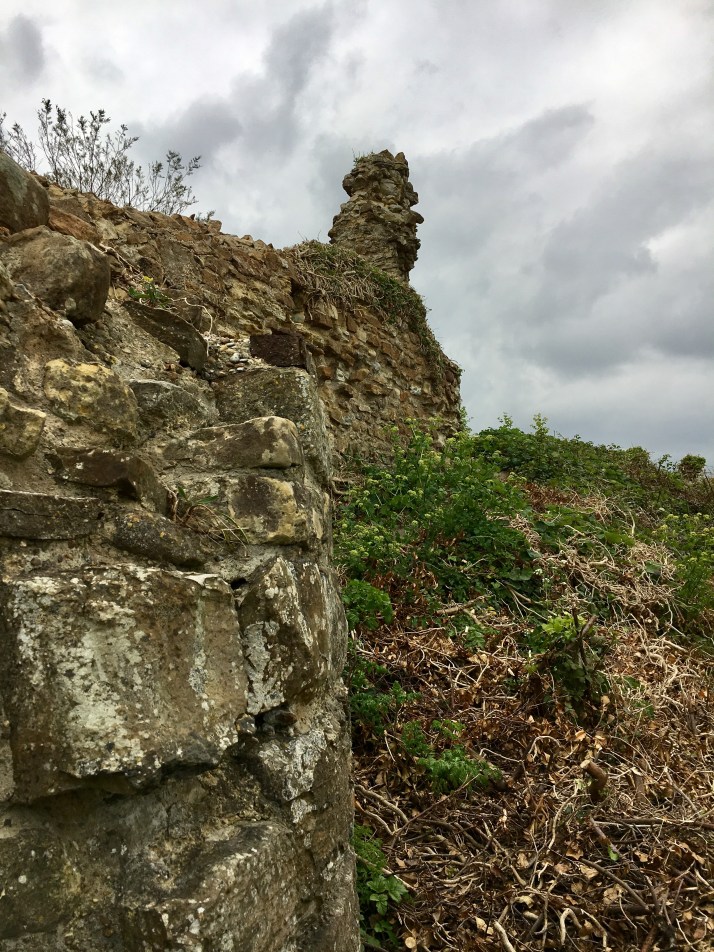
The main gate is barely recognizable (below left).

FullSizeRender 6

Despite all the ruins, one thing does remain intact—the dungeon! You can take the stairs down to it, but we elected to remain topside.

We intended to spend the rest of the afternoon at the Royal Pavilion in Brighton, but an accident on A27 delayed our return by more than two hours. We’ll see about touring that before he head out to Dorset tomorrow. Ta-ta for now!

SaveSave

There’s Something About the 1300—Bodiam Castle

The short film that plays in one of the only remaining “rooms” in Bodiam Castle is worth watching, if only because Sir Edward Dalyngrigge’s wife, Elizabeth Wardedieu, was part of the reason he could afford to build such a perfect medieval castle. She was rich. And he had gained a good deal of power and favor with King Richard II, which is how he gained a license to crenellate (build a castle). He could have simply crenellated his moated manor house, but instead built one from scratch.

IMG_3287

This castle may look intact—it has the four round towers on the corners and the square towers in the middle of each wall—but it’s made of sandstone, so until it was put into the National Trust, it was crumbling.

When you cross the moat and enter, you quickly realize this is a ruin. It’s also a nursery for bats.

The well is still there, although you wouldn’t want to drink from it.

IMG_3303

The best view from the top of the castle is at the top of the south tower. The one that requires you to climb 56 high steps in a tight spiral. We opted for one of the north tower views.

Those keyhole windows you may have imagined were in all castles finally showed up in this one. As did the killer ceiling just beyond the porticullus. Those holes allow rocks and boiling oil to rain down on any intruders who might have made it over the deep moat and past the well-guarded barbican. None did, though, as this castle never actually had to defend itself.

Except against time.

Next, we’re off to 1066. Ta-ta for now!

If It’s Tuesday, It Must Be Hertsmonceux

We’ve been on our trip to England for a week now, and although we’ve covered a lot of ground and visited a number of attractions, it’s time to step it up a bit. Like yesterday, we managed three places today. If there hadn’t been a wreck on the A27 preventing our timely return to Brighton (two hours were lost), we might have done one more.

First stop: Hertsmonceux Castle in East Sussex. From 1957 to 1988, the grounds were home to the Royal Observatory, but now it’s the Observatory Science Center. Obviously a popular place to bring students (there were four buses in car park, and you could hear the children from the car park), we decided not to pursue a visit.

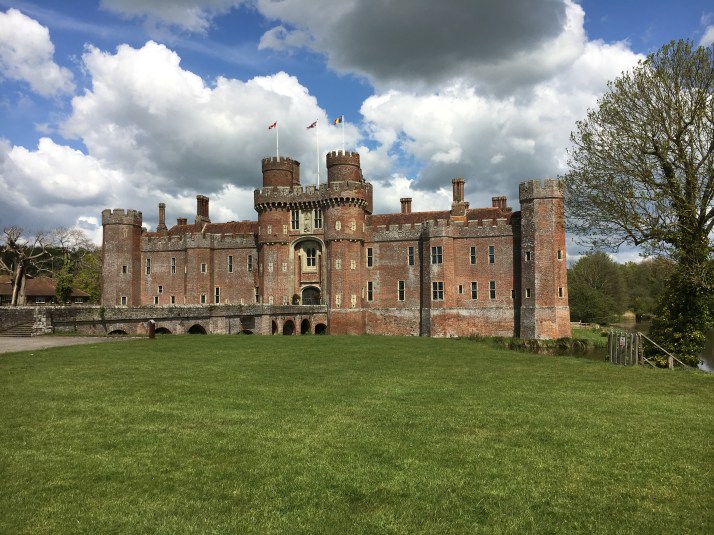
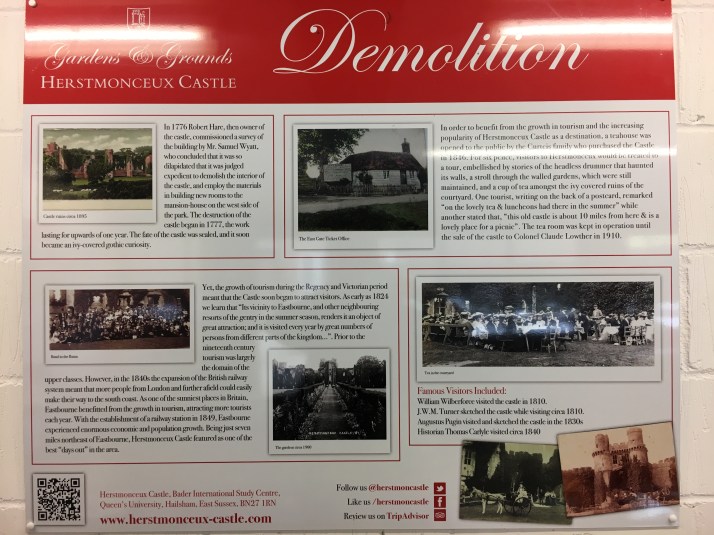
The brick-built castle is just beyond the observatory and is now owned by the Canadians. Queen’s University runs its International Studies program here, and the students board in the castle. Although tours are available at limited times, we elected to tour only the gardens and grounds.

IMG_3281

Original construction began in 1441, which meant Sir Roger Fiennes probably never saw it completed.

IMG_3283

IMG_3284

We spent nearly an hour walking the grounds and touring the gardens. Another few weeks, and the colors would have been more varied in the Elizabethan Garden. Other gardens include a butterfly garden, Shakespeare Garden, and a Zimbabwe sculpture garden.

The site features a huge sun dial, rows of hedgerows, chestnut trees, a lake and folly, and an extensive woodland park. It would have been easy to get lost in the azalea bushes.

Although there’s a moat in the front, it’s a dry moat in the back.

As with most castles, there is a tea room and a visitor center. Spectacular surroundings and a beautifully maintain structure make this property a must-see if you’re ever in East Sussex!

Next up: Bodiam Castle. Ta-ta for now!

IMG_3280

An Ancient Castle in Arundel


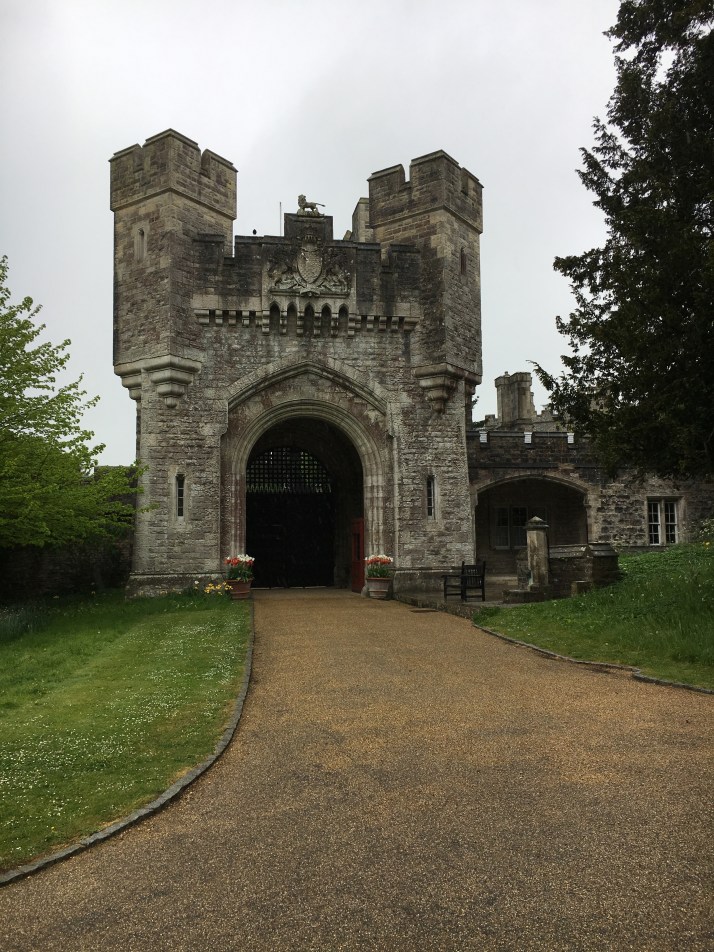
Our last stop on May Day was to the 950-year-old Arundel Castle. Considered one of the most impressive in England—most of the house was rebuilt during the Victorian period—it features Gothic architecture, a crenellated Norman keep, a gatehouse and a tower. Well-maintained and finely furnished, this property also benefits from being inhabited for almost all those years by the Dukes of Norfolk and their descendants.

IMG_3242

Once through the main gate, we knew this was a different sort of castle from the Tower of London. There were pots of tulips everywhere!

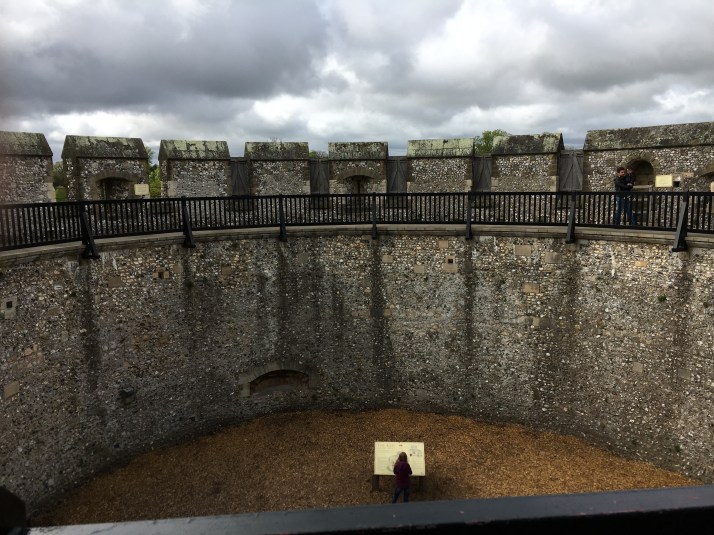
We made our way to the castle keep, and despite the number of stairs we had to climb to get to the stop, it was well worth it! Here’s the inside of the keep from the top walk, followed by the views from the top.

IMG_3229

IMG_3232

The furnishings inside the castle are phenomenal. I was only able to take a few photos before a docent informed me there was no photography allowed. This is such a shame since not all the rooms have postcards available for purchase. We were especially impressed by the two-story library, but there were no photos available to purchase.

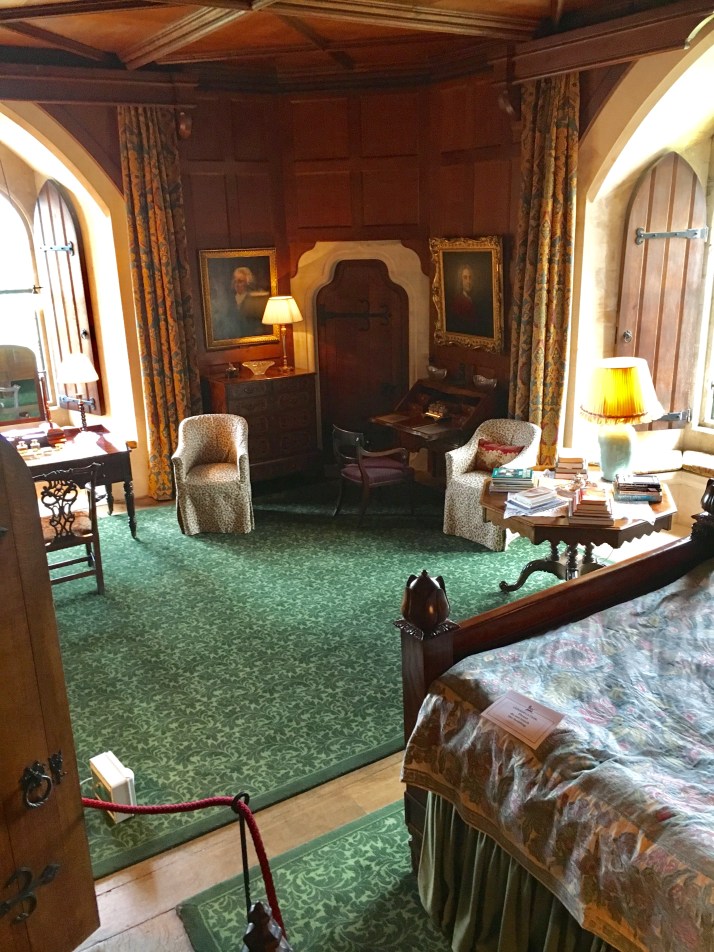
This chapel isn’t the only one on the grounds, but it’s in the main castle. Here’s one of the bedchambers.

FullSizeRender 5

Once we completed a tour of the main castle (our ticket allowed us to see not only the main floor but also the floor above), we headed outside. It’s a bit of a walk to the Fitzalan Chapel and its white garden, and the Collectors Earl’s Garden, but it’s well worth it. As always, be sure to look up. The ceilings are amazing.

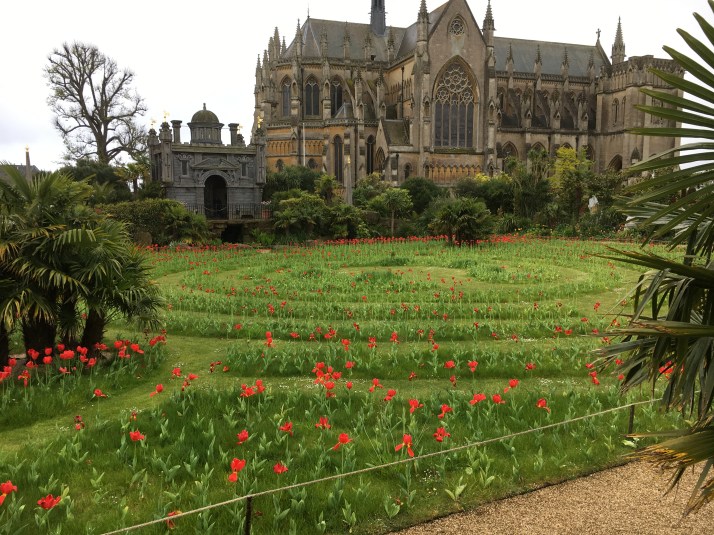
The garden is private and features tulips, lilies, and lots of water features.

The view from the garden is also impressive. We wish we could have spent some more time here, but the castle closes at 5:00 pm, so we had to take our leave. Ta-ta for now.

IMG_3254

A Visit to Petworth House

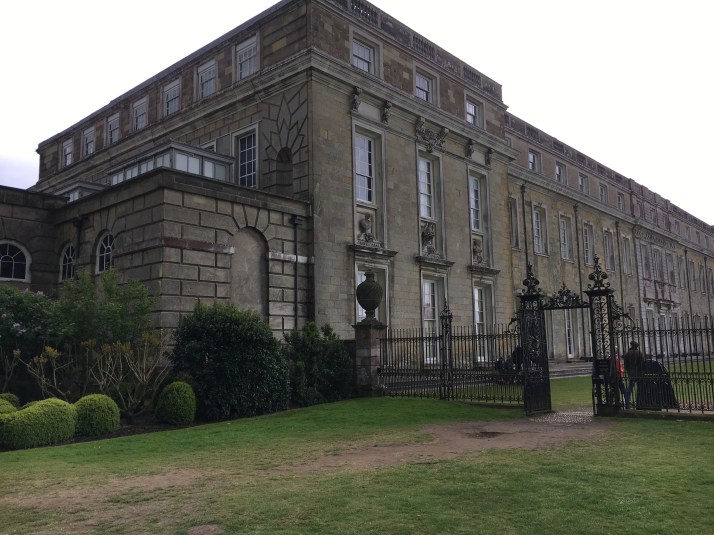
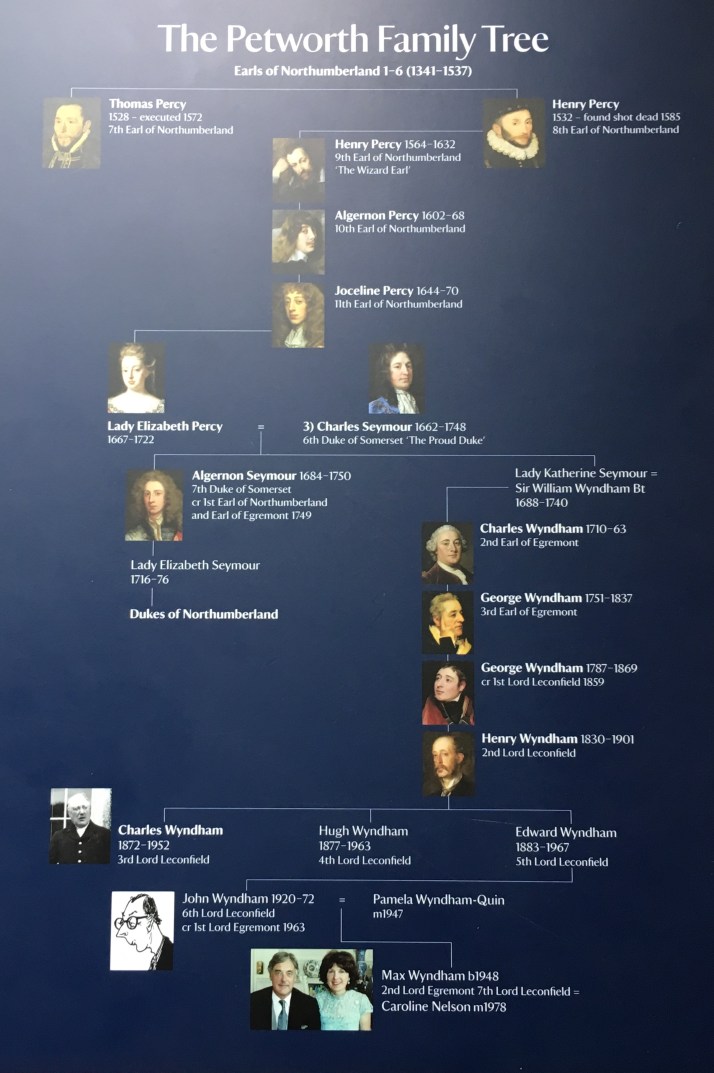
Petwork House, located in Petworth, West Sussex, has been home to the descendants of Earls of Northumberland, Dukes of Somerset and Earls of Egremont for 900 years.  These aristocrats assembled an extraordinary amount of art—works by Anthony van Dyck, Peter Lely, Grinling Gibbons, Louis Laguerre, JMW Turner, Gainsborough, Reynolds, Flaxman and others—and it’s all on display. With painted ceilings and illuminated painted murals lining the Grand Staircase (Laguerre even painted the underside of the stairs), this National Trust property is an impressive art gallery. But that’s not all. With acres of pleasure gardens and a deer park, this treasure is a must-see.

IMG_3218

FullSizeRender 9

We entered the complex from the servants’ entrance, a door that looks out toward St. Mary’s the Virgin Church and is just a stone’s throw from the school house.

The servants’ quarters and kitchens make up an entire building across the courtyard from the actual house. Rows and rows of tulips and other flowers decorate the space between the buildings.

IMG_3182

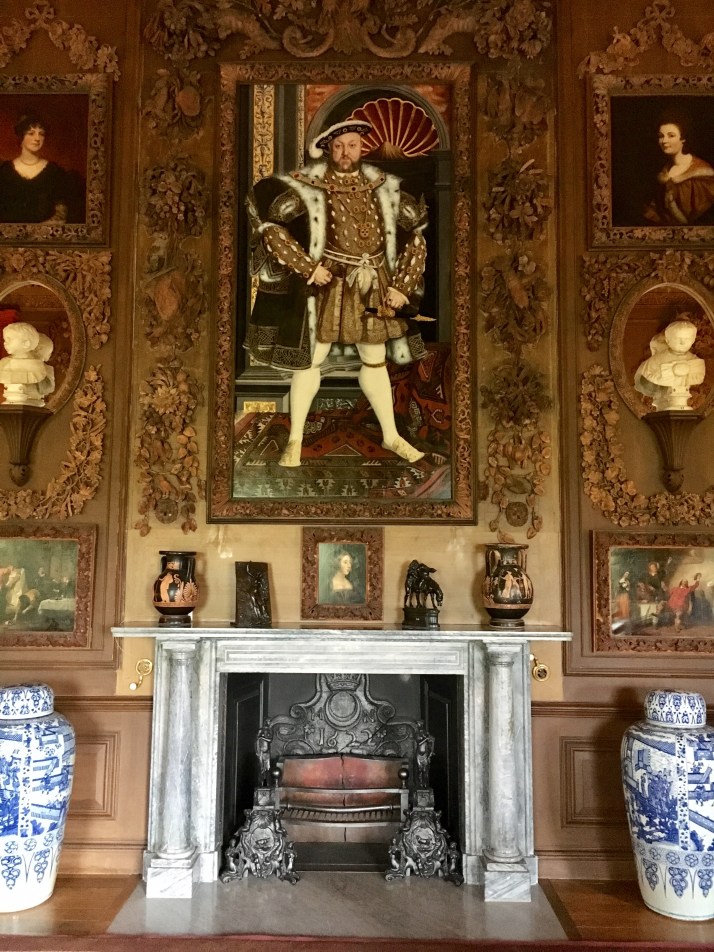
Once inside the main house, it’s apparent this is more of an art gallery. Paintings line the walls nearly to the ceiling, and marble statues are everywhere.

Those paintings just above are on the ceiling and the underside of the stairs.

FullSizeRender 3

Gues who?

Among all the artwork are some beautiful furnishings as well as a chapel.

One of the most impressive pieces in this house is the original Molyneux Globe. Made in 1592, it’s the earliest terrestrial English globe in existence.

FullSizeRender 4

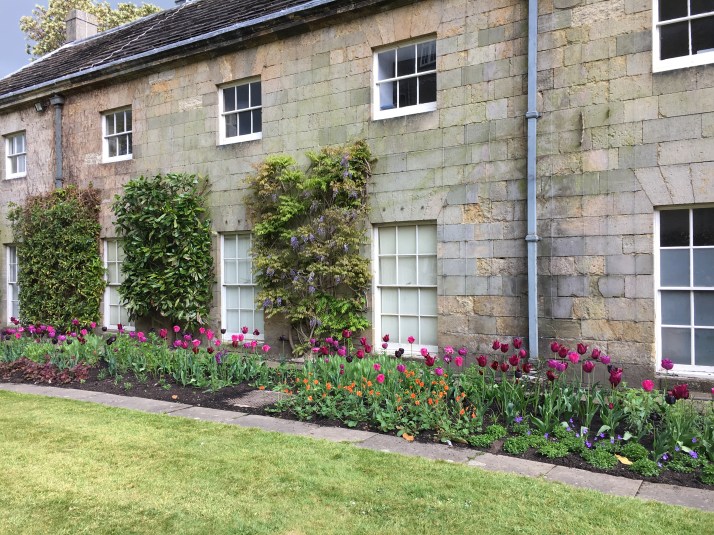
Outside the buildings are the impressive grounds. This time of year, the trees are in flower, tulips are everywhere, blue bells have bloomed, and everything else is green. The air is fragrant with the scent of apple blossoms.

And finally, there are the follies. They’re a bit of a hike on a crushed granite path, but well worth the walk. We had to hurry, too, as we had one more stop to make down in Arundel. More about that in the next post.


When May Day is Also a Bank Holiday

Bank holiday Mondays means that attractions are open that normally are not. And when the Monday is also May Day, there are plenty of festivals and events happening all over England. Today was no exception, which is why we have to break up today into three separate posts.

We covered a lot of ground, and none of it was in Brighton (where we have a room at Blanch House for three nights).

Weald Downland Living Museum played host to a Food and Folk Festival, an event that attracted hundreds to this picturesque site where the past comes to life in everything they do. We spent two hours, mostly walking the grounds, to study the historic houses and watch demonstrations on how woodworking used to be done before Shopsmiths—and electricity—were invented.

This living museum includes a working farm and examples of housing, buildings, farm implements and tools associated with life in the past—and we’re talking up to 800 years in the past! Their extensive grounds are dotted with houses that have been moved here from their original locations in other parts of England.

Can you guess which one is from the thirteenth century?

Their collection of wagons include those most used on farms, including a Dorset wagon and a cattle wagon They also have the horses to pull them, including two Percheron and two Shires.

And what would a farm be without the animals? Piglets!

Today’s activities includes demonstrations, food booths, entertainment and more. The blacksmiths were busy making horseshoes.

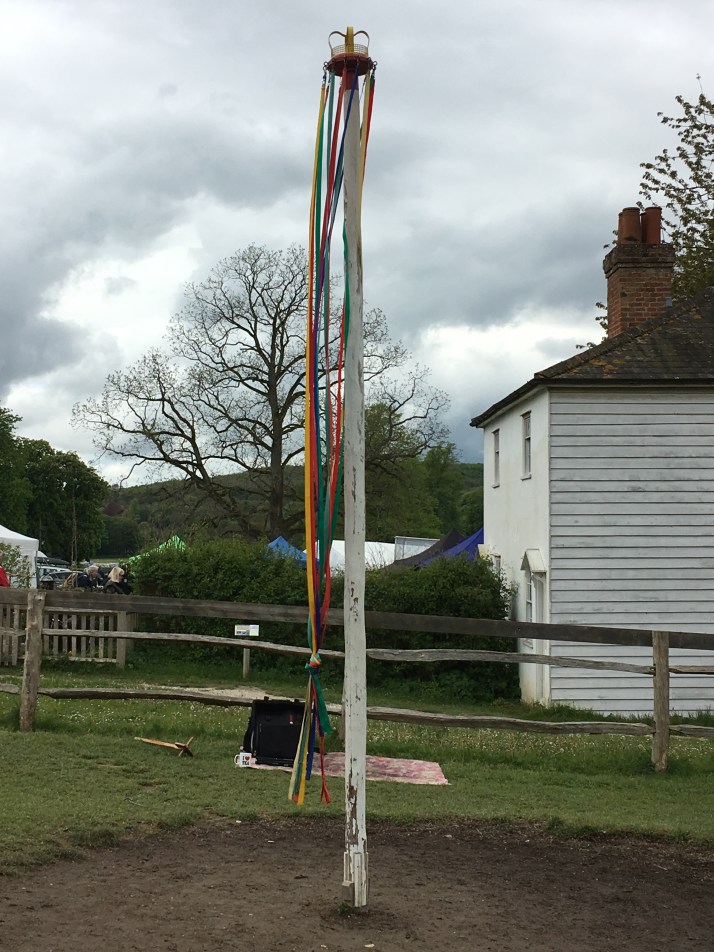
And, of course, there was a maypole. We took our leave just as the rain began to fall and headed for Petworth. More about that visit in our next post.

IMG_3146


London to Brighton by Way of Quaint

When we took our leave of London in a hired car (a Skoda Octavia) from Hertz, it was about 11:30 this morning. Well, we didn’t exactly leave London, at least, not for another forty-five minutes. That’s how long it took to drive the six miles it took to get out of the city and on our way south. We shudder to think of how much longer it might have taken if it wasn’t a Sunday!

IMG_3120

Driving on the other side of the road isn’t so difficult—you can usually just follow someone—it’s those skinny two-lane roads and one-car-wide roads that provide the real challenge. Those are the roads we took as we visited Horsham, Shipley, and Kirdford in West Sussex.

Those of you familiar with our book, TUESDAY NIGHTS, will recognize Horsham. The Cunninghams live there when not in London. Shipley is the home to the Waterfords, and it’s the youngest daughter, Olivia, who Michael Cunningham decides he will one marry day after he rescues her from a would-be rake in the Ship’s yard. Although the Ship, a tavern and possible inn, no longer exists, bits of the nearby medieval Knepp Castle do.

IMG_3105


The local church, St. Mary’s, is surrounded by gravestones while an old phone box sits nearby. The brick structure is indicative of the churches that can found in most small villages.

The brown gravestone on the left side of the picture marks the final resting place of a distant relative. There are probably many more in the church yard—there are 120 people buried there—but most of the stones are unreadable.


Kirdford, another nearby village, was featured in THE GRACE of a DUKE, and the public house mentioned in the book is still there. The Forester’s Arms is undergoing some exterior renovations, but it’s still open for business—two-hundred years later! The place was packed for a darts tournament when we stopped by for a pint.

img_3123.jpg

Hedgerows, trees, and wide-open fields dotted with sheep make up the landscape, a truly idyllic setting for a Regency-era novel. Or two or three.

Next stop—Brighton. Ta-ta for now.


Castles and Canterbury in Kent


Out last full day in London on this end of our trip wasn’t spent in London at all, but rather visiting Kent. We took a train (Southestern) from London’s St. Pancras International station (which we accessed using the Underground and a six-block walk) for an hour ride through the beautiful green countryside. The white cliffs of Dover were visible from miles away,  a sure sign the hour-long ride was neary over.

Our guide, Yvonne, met us at the Dover Priory station along with a driver who negotiated the many single-lane, super slim roads to get us to a number of attractions.

First up was an overview of Dover. Because this town was extremely important during World War II, there are a number of garrisons still visible in the hills overlooking the port.

Those structures silhouetted on the opposite hill were our next destination. King Henry II’s Dover Castle, St. Mary-in-Castro Church, and a light tower leftover from the Roman days are part of the fortifications that have protected the English coast for over 2,000 years.

There are a few staged rooms in the castle along with some accessories, like chain (or mail, depending on the language), a really deep well, and lots and lots of spiral staircases up the turrets to the top. The view from above is amazing, though, so it was worth the climb.

This castle featured a dry moat that’s still very must in evidence. The grass is kept trimmed by the sheep that were brought in to do the job of maintaining the grounds.

A short drive north brought us to Walmer Castle & Gardens, a fortress built by King Henry VIII to defend against the church in case they retaliated against him for replacing Catholicism with the Anglican Church. A newer facility, it’s also the home to the Lord Warden of the Cinque Ports. The Duke of Wellingham was one such, and he actually died while in residence here.

The Queen Mum enjoyed visiting this castle because of the tranquil gardens. The 95-foot long pond was installed on the occasion of her 95th birthday. This castle also features a dry moat, probably one of the prettiest you’ll ever see.

IMG_3086

Next, we took a quick drive past Deal Castle on our way to St. Augustine’s Abbey in Canterbury. There’s not a lot left of the Benedictine structure—it was founded in 598—, but it was this particular monk who managed to get the King of Kent, Aethelberht, to convert to Christianity (his wife, Bertha, was already a Christian). The king ordered that a church and monastery be built.

Here are some of the gates leading into the abbey. Gothic arches rein in the town of Canterbury, as do a few surprises.

We caught the 4:25 train out of Canterbury back to London and then had dinner at London’s oldest restaurant, Rules. Established in 1798, this elegant eatery features picture-covered walls, interesting statuary, and excellent service.  We’re off to bed now. Ta-ta for now!

IMG_3103